Treatments
Korean Medicine Clinic Seoul: Visits Up 113%, What to Book
16 min readSep 18, 2026
Last updated: 18 September 2026
Korean medicine clinics saw 31,453 foreign patients in 2024, up 113% on the year before, according to Korea's Ministry of Health and Welfare. It is still a small category next to dermatology. It is also the fastest-growing one in the country's medical tourism data, and most of the people driving it had never set foot in one before.
So what is a hanuiwon, what are visitors actually booking, and which one in Seoul would we choose?
What does a Korean medicine clinic actually do?
Korea licenses two kinds of doctor. A dermatology clinic is run by a physician of Western medicine with the tools you already know — botulinum toxin, fillers, lasers. A Korean medicine clinic is run by a hanuisa, a doctor who completed a six-year Korean medicine degree and a national licensing exam, and works with four things, none of them an injection of product.
What you'll hear | What it means |
|---|---|
Acupuncture | Very fine needles placed at specific points. Far thinner than an injection needle; most people describe pressure, not pain. |
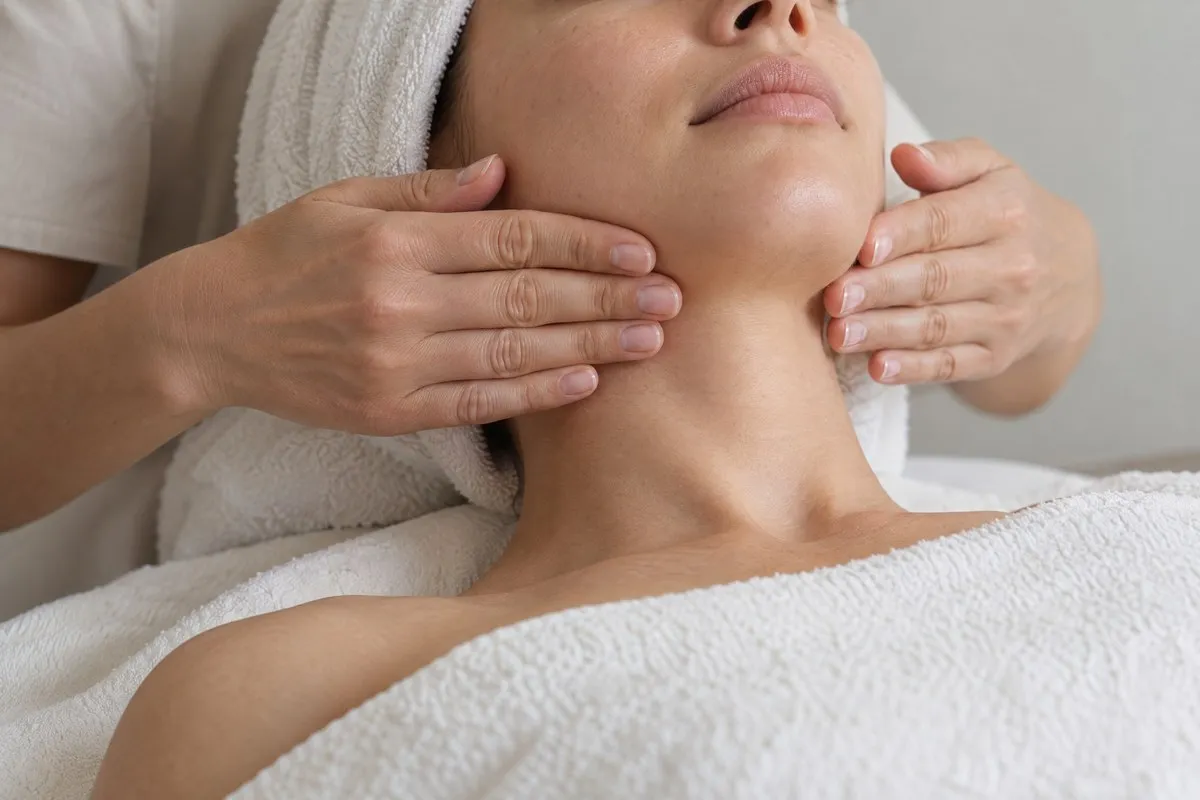
Chuna | A hands-on therapy that realigns joints and muscles. The nearest Western comparison is osteopathy, but chuna is its own licensed system with its own training. |
Herbal medicine | Prescribed by the doctor after diagnosis, taken as a decoction or granules. A prescription, not a supplement. |
Cupping and moxibustion | Suction cups, and warmed mugwort held near the skin. Both used for circulation and muscle tension. |
Of the four, the two a visitor will actually meet are the first two. Herbal medicine is a longer relationship with a doctor who knows your history; nobody flies home with a month of decoctions. Plan around acupuncture and chuna.
None of this is alternative medicine in Korea. Two in three Korean adults have used a Korean medicine clinic, according to the health ministry's 2024 survey — for back pain, posture, jaw problems and recovery, the way people elsewhere use a physiotherapist or osteopath.
What are visitors booking?
Not what you would guess. On our platform, the search that brings people to a Korean medicine clinic is not "acupuncture Seoul." It is facial asymmetry — by a factor of about four. The same pattern shows up on TikTok, where the Korean medicine content that travels among English-speaking creators is almost entirely about one thing: getting an uneven face and a tight jaw looked at, without a needle of product.
Which raises the obvious question.
Why would an uneven face send someone to a Korean medicine clinic — and why in Korea?
Because at home, the non-surgical menu for an uneven face is short. Botulinum toxin to relax a dominant muscle, which lasts three to four months. Filler to add volume to the smaller side, which lasts six to eighteen months. After that, the conversation moves to surgery.
Korea reads the same face from a different direction: the jaw joint, the chewing muscles and neck posture that pull a face off-centre, treated with hands and needles rather than product. This is the part most guides skip: it is not a gentler version of the injectable route. It is a different diagnosis, and it starts somewhere the injectable route never looks. This is not a specialty invented for visitors. Jaw joint disorders in Korea are most prevalent in women in their twenties — the highest rate of any age or sex group, per national insurance data — so Korean medicine clinics see this group every day, and the approach is routine here rather than exotic.
Whether it changes your face is a question for the doctor after an assessment, not for an article. What can be said is that it is a different approach, without a needle of product, and that it is available to book.
Our pick: Duna Clinic, Seongsu
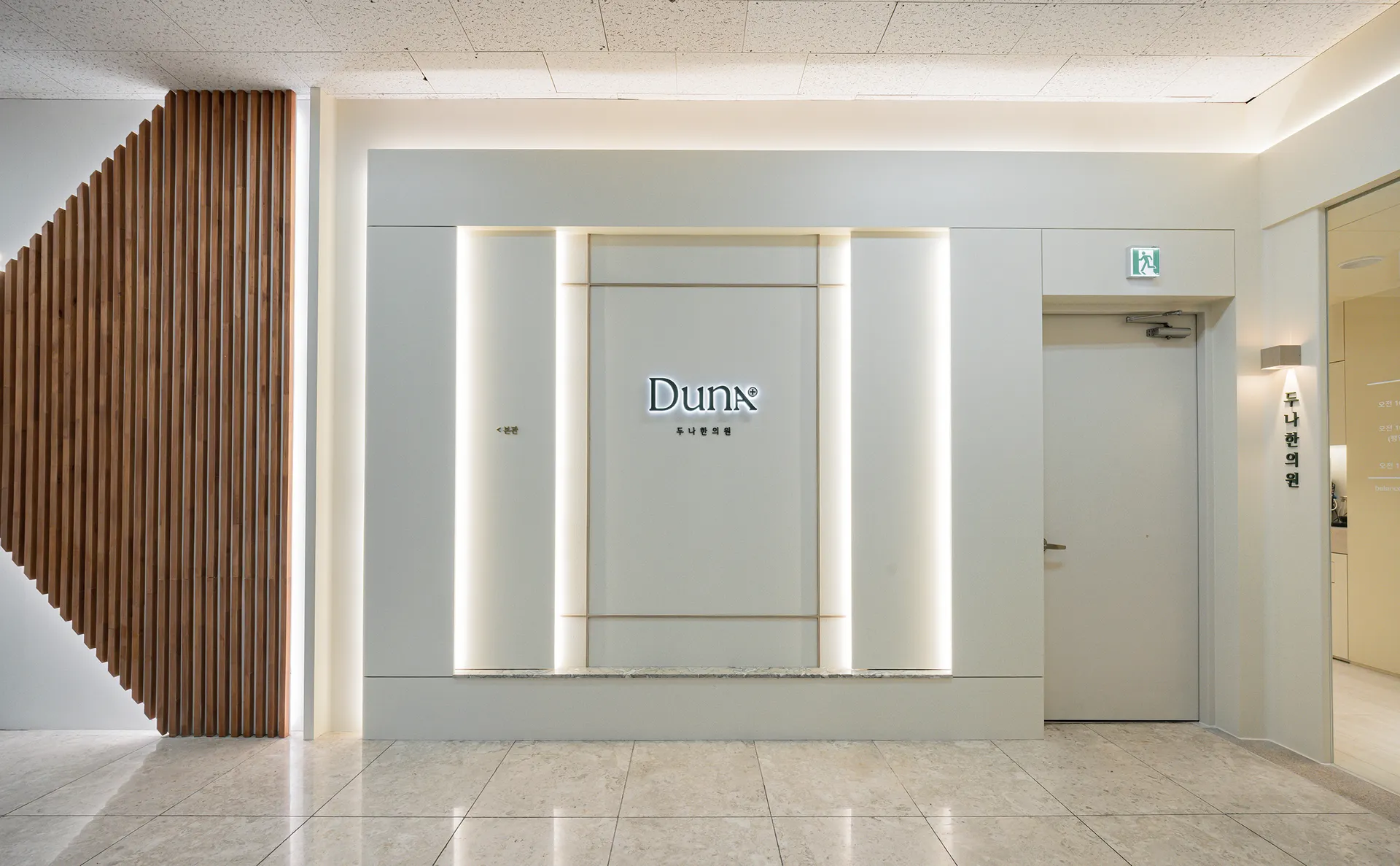
Of the Korean medicine clinics on our platform, Duna Clinic is the one we would choose for this, and the reasons are on record.
Designated by the Korea Institute of Oriental Medicine in 2025 as a clinic for supporting foreign patients — a government-affiliated designation, not a marketing badge.
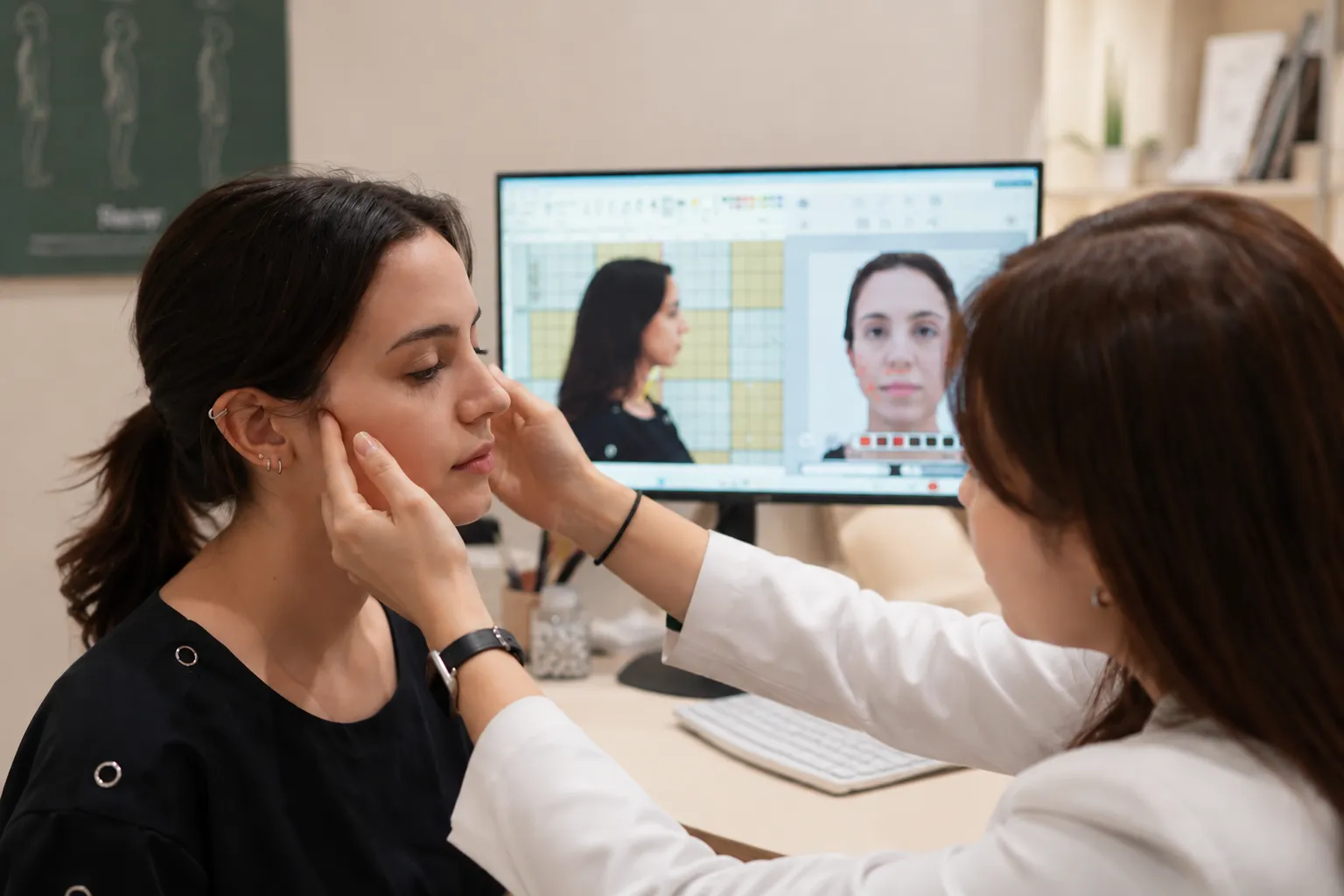
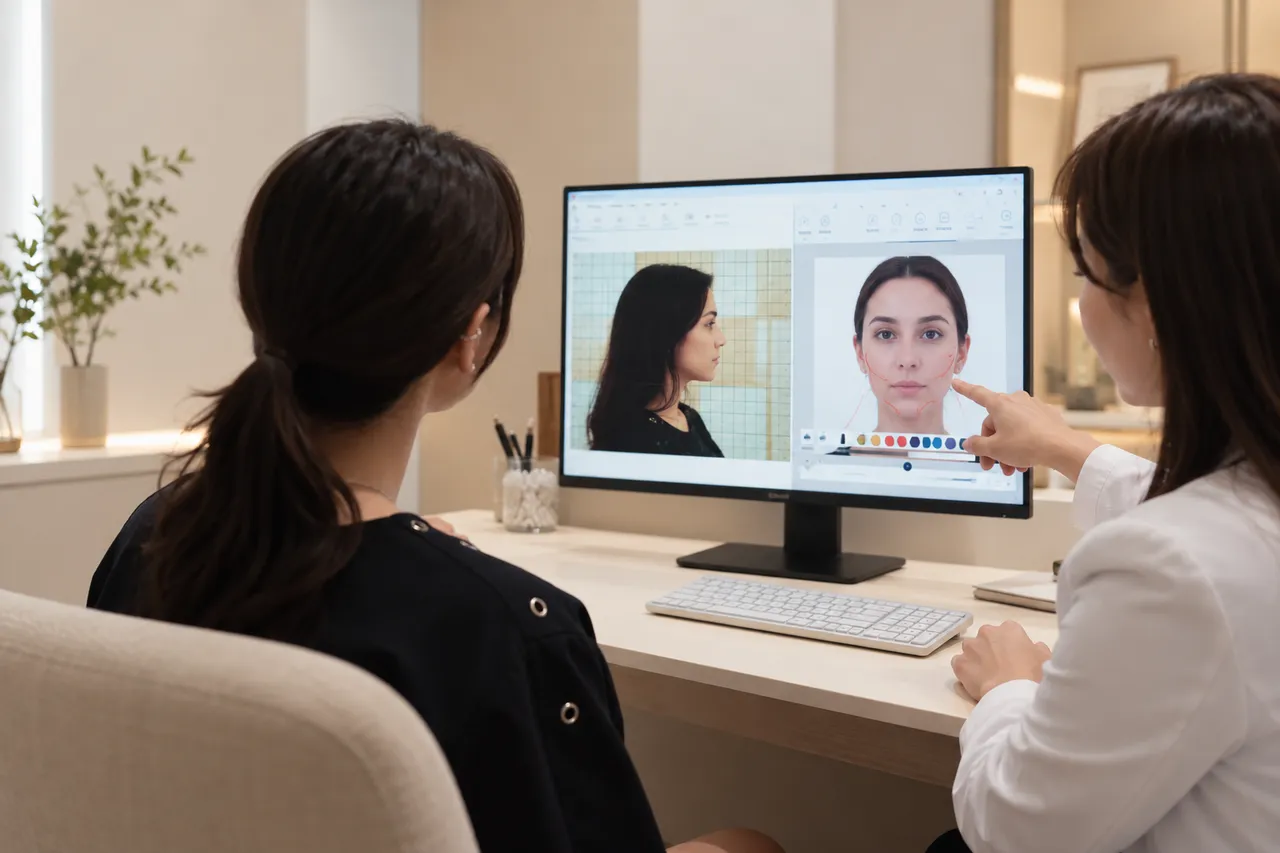
The first Korean medicine clinic to bring AI into facial asymmetry care. Since April 2025 it has worked with EZ FACE, an AI facial-analysis company, to read front and side photographs for fine asymmetries and track them through treatment.
It does this every day, in English. By the clinic's own account it sees around twenty foreign patients a day from some forty countries — the United States, Singapore, Canada, the United Kingdom and Australia among them — with English spoken from reception through the treatment room.
This is its specialty. Facial asymmetry, jaw-joint imbalance and posture, under Dr Kim Hyogyung, who opened the clinic in 2022.
What | Price |
|---|---|
Consultation (deposit) | ₩20,000 |
Face & TMJ Care | $180 |
Course A — contouring lifting + TMJ | $350 |
Chuna, one area | $55 |
Deposit is paid when you book through Seoul Beauty Global; the rest is paid at the clinic. Menu prices are each clinic's own listing and can shift slightly with the exchange rate.
It is a short walk from Seongsu Station, open until 8:30pm Monday to Thursday, and Seongsu is where the city's newest cafés are — easy to place in a day you were going to spend there anyway.
What if needles are the problem?
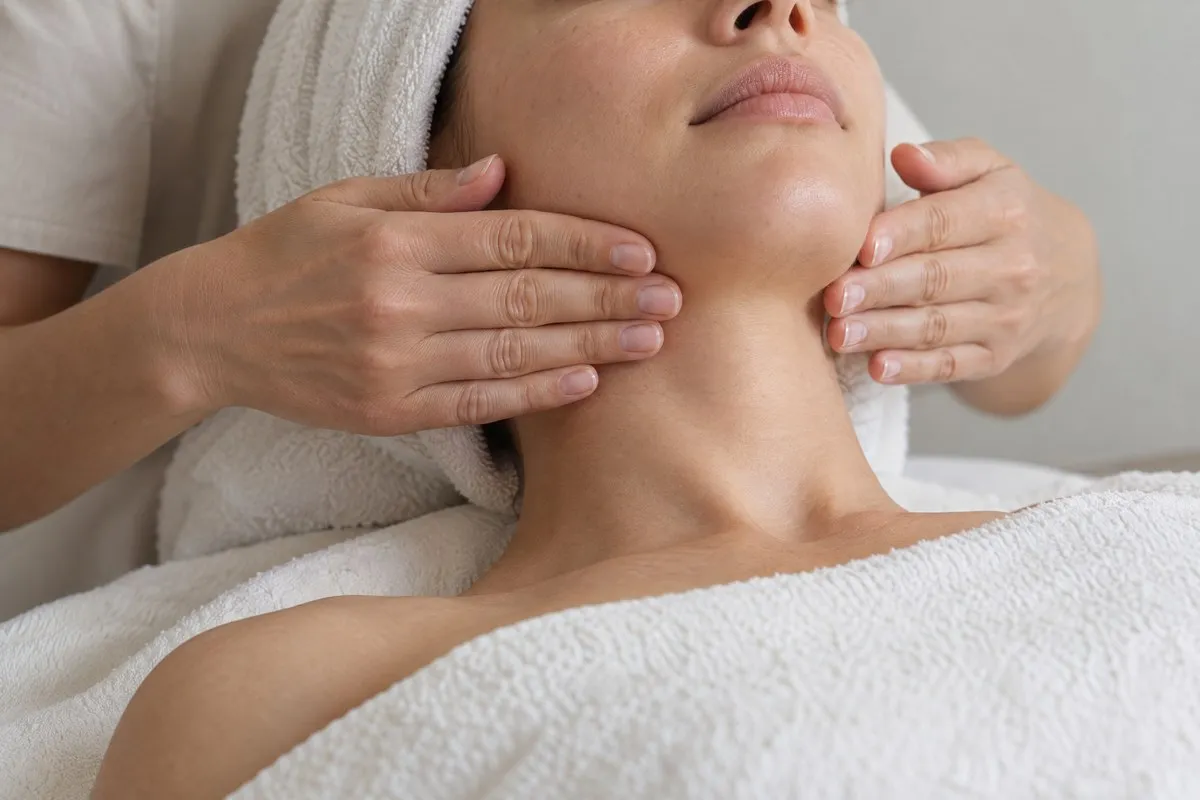
Some people read all of the above and stop at the word acupuncture. If that is you, there is a hands-only route through Seoul's aesthetic studios that we cover separately: contouring massage rather than treatment, no needles, one appointment. The hands-only route in Seoul
FAQ
Is a Korean medicine clinic the same as a Chinese medicine clinic?
No. They share ancient roots, but Korean medicine has its own texts, its own herbal formulas and its own six-year degree and national licence. Chuna, the manual therapy, is Korean.
Is chuna the same as chiropractic or osteopathy?
It is the closest comparison, but chuna is its own licensed system within Korean medicine, covering joints, muscles and posture.
Does acupuncture hurt?
The needles are far finer than an injection needle. Most people describe pressure or a dull ache rather than pain. If needles are a hard no, see the hands-only route above.
Do I book a treatment or a consultation?
A consultation. The doctor assesses you first — at Duna that includes AI photo analysis of the face — and any treatment is decided after that.
Can a Korean medicine clinic treat facial asymmetry?
That is what clinics like Duna assess and treat, through the jaw joint, chewing muscles and posture. Whether and how much it helps in your case is for the doctor to say after an assessment; no clinic on this page promises a result.
Is it in English?
At Duna, yes — the clinic states English is spoken from reception through to the doctors.
How much does it cost?
The consultation deposit is ₩20,000, charged in USD at the day's rate. Face & TMJ Care is $180 and the one-day Course A is $350. Every price is listed before you book, and treatment is paid at the clinic.
See Duna Clinic → Duna Clinic, Seongsu
Part of our series on what English-speaking visitors book in Seoul.
Sources
1. Ministry of Health and Welfare, foreign patient statistics for 2024 (Korean medicine clinics: 31,453 patients, +113.2%).
2. Ministry of Health and Welfare, 2024 Survey on the Use of Korean Medicine (67.3% of adults).
3. National Health Insurance Service, temporomandibular disorder statistics (2019).
4. Korea Institute of Oriental Medicine webzine, issue 25 (February 2026) — Duna Clinic designation and foreign-patient figures as reported by the clinic.
5. Seoul Finance, 17 April 2025 — Duna Clinic and EZ FACE AI partnership.
6. Seoul Beauty Global search and booking data, 2025–2026; Duna Clinic menu, retrieved 17 September 2026.
Explore Korea’s Beauty
Discover places worth visiting
Want to Read More?
Discover more stories